Best Email Verification Tools in 2026 (Top 10 Email Validation Tools)
SanitizeEmail•19 Jan 2026•5 min Read

The best email verification tools in 2026 include SanitizeEmail, Hunter, NeverBounce, ZeroBounce, Clearout, MailerCheck, Kickbox, Bouncer, EmailListVerify, and Emailable. These tools help businesses reduce bounce rates, protect sender reputation, and improve inbox placement by identifying invalid, risky, and non-deliverable email addresses. While all of them perform core validation checks, they differ in accuracy, pricing models, scalability, and suitability for marketers, agencies, SaaS teams, or large one-time email lists. Choosing the best email validation tool in 2026 depends on how accurately it detects invalid, risky, and non-deliverable addresses before campaigns are sent.
The table below highlights which tools are best suited for specific, common scenarios faced by email marketers, agencies, and SaaS teams.
| Use Case | Best Tool |
|---|---|
| Best email verification tool for email marketers and agencies | SanitizeEmail |
| Best for bulk email list cleaning before campaigns | SanitizeEmail |
| Best for real-time email validation at signup | SanitizeEmail |
| Best free-first email verification platform | Hunter |
| Best for sales prospecting and lead enrichment | Hunter |
| Best for high-volume enterprise verification | NeverBounce |
| Best for advanced email intelligence and scoring | ZeroBounce |
This table is intended as a quick decision aid. Detailed breakdowns of each tool, including strengths and limitations, are provided in the full list below.
When you search for the "best email verification tools," you frequently come across lengthy lists that appear to be similar but are unreliable. A lot of comparisons are presented from a sales or affiliate standpoint, and it's unclear how the tools were assessed or which use cases they truly support.
However, very diverse teams utilize email verification software. An email marketing firm, a SaaS company verifying signups, or a growth team launching massive campaigns have different requirements than a sales team conducting cold outreach. Rather than producing clarity, treating all instruments equally frequently leads to misunderstanding.
This guide exists to provide a practical, marketer-focused comparison of email verification tools. Instead of relying on feature checklists alone, we focus on how these tools are commonly used in real workflows, including:
These are well-known and frequently utilized tools. Each is evaluated using data that is accessible to the public and is positioned based on its main advantages and common applications rather than advertising promises.
The goal is to assist you in understanding which email verification solutions make the most sense for marketers and agencies operating campaigns at scale, as well as how various options compare in terms of scope, usability, and fit, rather than to declare one product to be "best for everyone."
Email verification tools are software solutions that check whether an email address is valid, reachable, and safe to send to before you use it in an email campaign or store it in your database. These email validation tools are widely used by marketers, agencies, and SaaS teams to protect sender reputation and improve deliverability.
Their main goal is to assist senders in avoiding email addresses that can result in delivery issues, including hard bounces, spam complaints, or reputational harm. Email verification systems detect dangers before a campaign is sent, rather than after it has been sent.
Most email verification tools analyze email addresses using a combination of technical checks, including:
Email verification technologies are frequently used by email marketers and agencies to check freshly gathered leads, clear lists before campaigns, and safeguard sender reputation over time. They are frequently utilized by SaaS teams throughout the signup process to stop fraudulent or subpar accounts from joining the system.
It's crucial to remember that inbox placement is not guaranteed by email verification technologies. Rather, they lower preventable risks that frequently result in spam filtering and bounces, making them an essential component of a sound email marketing workflow.
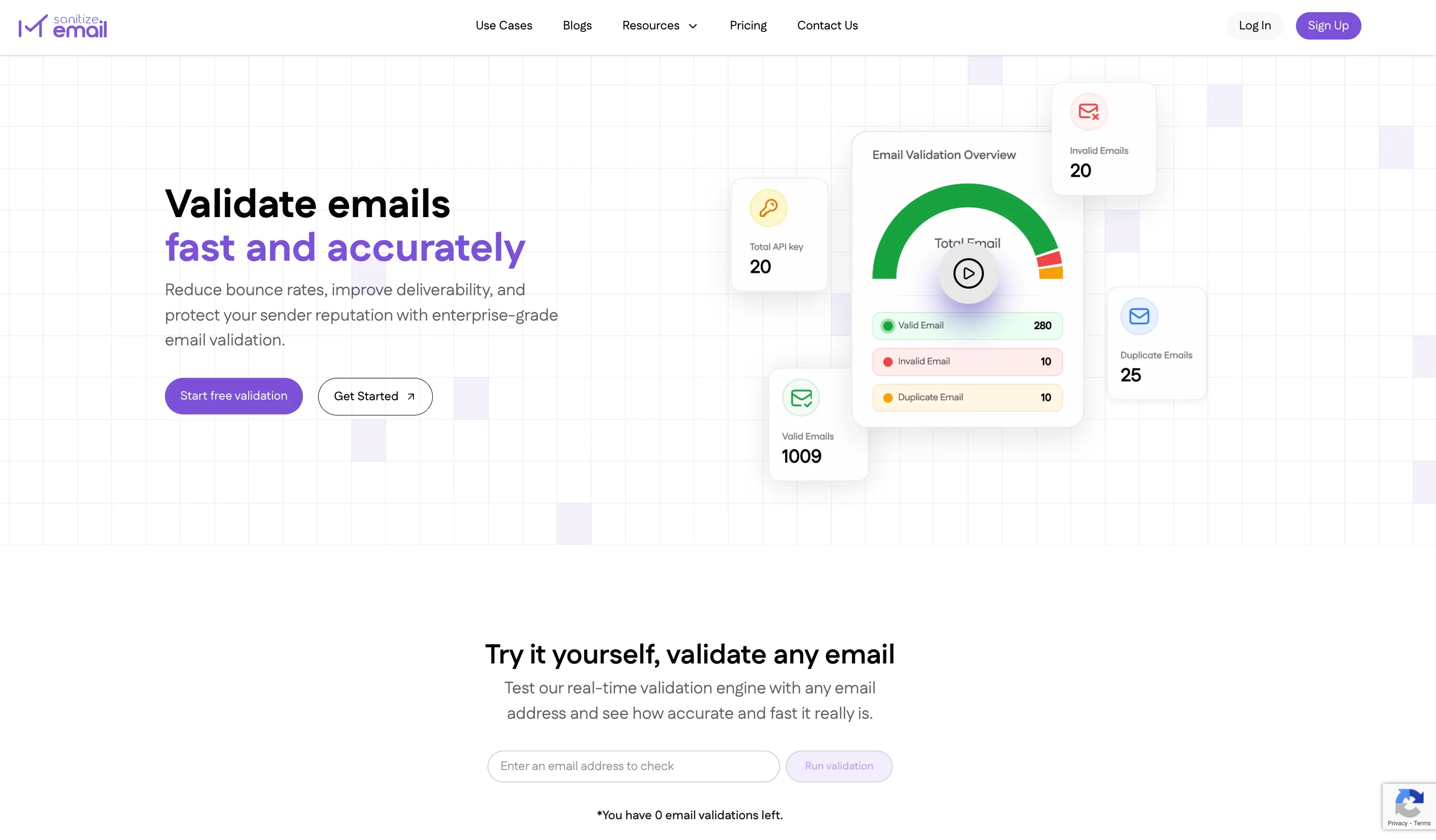
SanitizeEmail is an email verification tool built for email marketers, growth teams, agencies, and SaaS teams that run campaigns at scale and require reliable list hygiene before sending.
Unlike tools designed primarily for sales prospecting or lead discovery, SanitizeEmail focuses on campaign-ready email verification. Its core purpose is to help teams identify which email addresses are safe to send to, reduce bounce risk, and avoid preventable deliverability issues caused by poor list quality.
SanitizeEmail supports the verification workflows most commonly used in email marketing and campaign preparation:
These checks help teams reduce hard bounces and remove addresses that commonly correlate with low engagement or deliverability problems.
These checks help teams reduce hard bounces and remove addresses that commonly correlate with low engagement or deliverability problems.
Instead of relying only on basic format validation, SanitizeEmail combines multiple technical signals to produce high-confidence verification results.
Its verification process includes:
SanitizeEmail is particularly well-suited for teams that:
The product is positioned to fit naturally into deliverability-aware sending workflows, alongside authentication and engagement best practices. This includes reducing common issues that cause legitimate campaign emails to land in spam folders.
SanitizeEmail offers a free first experience designed to let users test accuracy before committing.
SanitizeEmail offers a free tier with 250 email validation credits per month, which automatically renews every month. This allows users to continuously test list quality, run small batch checks, and validate workflows without any upfront payment.
The free credits can be used for bulk list verification and standard verification checks, making it easy for teams to evaluate accuracy and results before upgrading to a paid plan.
Paid plans are structured for marketers and agencies running campaigns at scale:
SanitizeEmail also offers custom credit pricing for higher volumes, with per-credit costs decreasing as usage increases. Monthly, yearly, and one-time credit options are available, depending on usage needs.
This pricing model is designed to support both one-time list cleaning and ongoing email verification workflows, without forcing users into high upfront commitments.
SanitizeEmail ranks #1 in this list because it aligns most closely with the core needs of email marketers and agencies: accurate verification, bulk list cleaning, and practical deliverability risk reduction - without unnecessary complexity or sales-centric features.
Want to see how it works on your own list? You can test SanitizeEmail with free trial credits and verify your email list before sending any campaign.
Hunter is best known as a sales prospecting and lead generation platform, with email verification included as a supporting feature. It is commonly used by sales teams, recruiters, and outbound-focused growth teams that need to find and validate email addresses during prospecting.
Email verification in Hunter is designed to help users confirm the validity of discovered email addresses, particularly those generated through Hunter’s own lead discovery tools.
Hunter’s email verification feature supports common validation checks, including:
These checks are typically used to reduce bounce risk in cold outreach and sales emails, rather than for large-scale campaign list hygiene.
Hunter offers a credit-based pricing model bundled with outreach and lead discovery features, in addition to email verification.
Paid plans are billed annually and include email verification credits as part of a broader sales and outreach toolkit:
Hunter also provides Data Platform plans designed for API and bulk users. For example, users can purchase 10,000 verification credits valid for 12 months for approximately $110, making it suitable for programmatic or one-time bulk verification use cases.
It is less optimized for marketers who need to clean large email lists before sending high-volume campaigns.
Hunter’s email verification is not designed as a standalone deliverability tool. It does not focus on advanced list hygiene workflows, bulk campaign preparation, or deliverability-oriented risk reduction in the same way that verification-first platforms do.
For teams focused primarily on email marketing campaigns, a dedicated email verification tool may be a better fit.
Hunter is best positioned as a free-first, sales-oriented platform with built-in email verification. It works well for prospecting and outbound use cases, but it is not optimized for marketers or agencies managing large campaign lists.
NeverBounce is an email verification platform built specifically for bulk list cleaning and high-volume verification. It is widely used by marketing teams, agencies, and organizations that need to process large email lists before sending campaigns.
Unlike tools that include verification as a secondary feature, NeverBounce’s primary focus is list hygiene at scale, making it a common choice for teams handling hundreds of thousands or millions of email addresses.
NeverBounce supports verification workflows designed for volume and consistency, including:
These features are commonly used to reduce hard bounces and maintain acceptable sender metrics across repeated campaigns.
NeverBounce is optimized for teams that regularly work with large email lists. Its infrastructure and pricing model are designed to accommodate:
For teams where scale and throughput are the primary concern, NeverBounce offers a verification-first approach without additional sales or enrichment features.
NeverBounce positions itself as a tool for bounce prevention and list quality maintenance, not as a guarantee of inbox placement. Its value lies in helping senders avoid preventable deliverability issues caused by invalid addresses, which can negatively affect sender reputation over time.
This makes it suitable for teams that already follow best practices around authentication and engagement and want to ensure list quality does not become a weak point.
NeverBounce uses a hybrid pricing model, offering both pay-as-you-go credits and subscription plans depending on usage type.
Pay-as-you-go (one-time verification)
Users can verify lists without a subscription.
Subscription plans (ongoing verification & automation)
NeverBounce also offers monthly plans designed for continuous list hygiene.
Enterprise plans
Custom pricing is available for high-volume users (typically 250,000+ emails per month).
NeverBounce pricing is positioned toward teams that want automated, system-level verification, rather than just low-cost bulk cleanup.
While NeverBounce is effective for bulk verification, it may feel less accessible for smaller teams or users with low-volume needs. Its interface and pricing are geared toward ongoing, large-scale usage rather than occasional validation.
Teams looking for a simpler or more marketer-focused experience may prefer tools built specifically around campaign workflows rather than volume alone.
NeverBounce is best suited for high-volume email verification and bulk list cleaning, particularly for agencies and teams processing large datasets. It excels at scale but is less focused on lightweight or free-first use cases.
ZeroBounce is an email validation platform that combines standard verification checks with additional email quality indicators and reporting features. It is commonly used by marketers, agencies, and SaaS teams that want more visibility into the condition of their email data beyond simple valid or invalid results.
The platform positions itself around email quality assessment, rather than verification alone.
ZeroBounce supports both bulk and real-time verification workflows, including:
In addition to basic verification, ZeroBounce provides indicators that help teams understand potential risk levels within a list.
ZeroBounce emphasizes insight into email data, offering classifications and indicators that can help teams decide how to segment or treat different groups of addresses. This can be useful for organizations that want more detailed analysis before deciding which contacts to mail or suppress.
These insights are often used in combination with internal engagement data rather than as standalone decision-makers.
ZeroBounce is a good fit for teams that:
It is particularly useful when verification results need to be interpreted alongside campaign or engagement metrics.
ZeroBounce uses a credit-based pay-as-you-go model, with optional subscription access through its ZeroBounce ONE platform.
Pay-as-you-go (credit-based)
Users can purchase only the number of verification credits they need, without a mandatory subscription.
This model is designed for flexibility, especially for teams verifying lists on demand.
Free (Freemium plan)
ZeroBounce also offers a limited free tier.
ZeroBounce pricing is positioned toward teams that want a broader deliverability toolkit, not just email list cleaning, with flexibility to scale via non-expiring credits.
ZeroBounce is best suited for teams that want email verification combined with quality insights and reporting. It provides deeper visibility into list health, making it useful for data-driven teams that need more than basic validation.

Small teams and startups looking for a budget-friendly email verification tool with basic bulk verification and form protection.
Note: Clearout focuses mainly on verification and form protection, not a full deliverability or monitoring toolkit.
Pricing is credit-based, with higher plans unlocking more integrations and parallel verification.
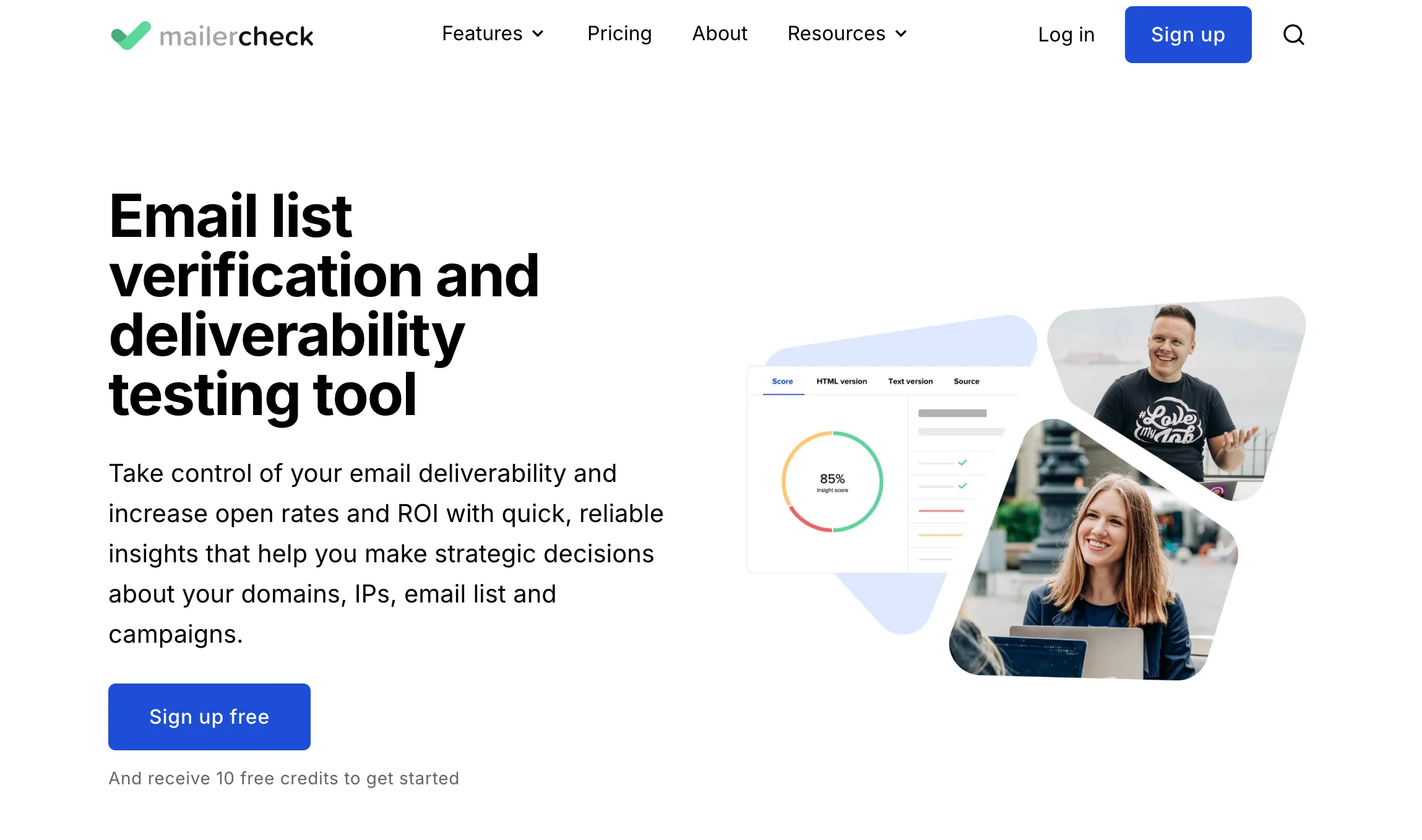
Teams that want email verification combined with basic deliverability monitoring, especially those already using MailerLite or focused on domain-level checks.
MailerCheck positions itself more as a deliverability monitoring add-on rather than a pure, high-volume email verification engine.
Free
Starter
Pro
Enterprise
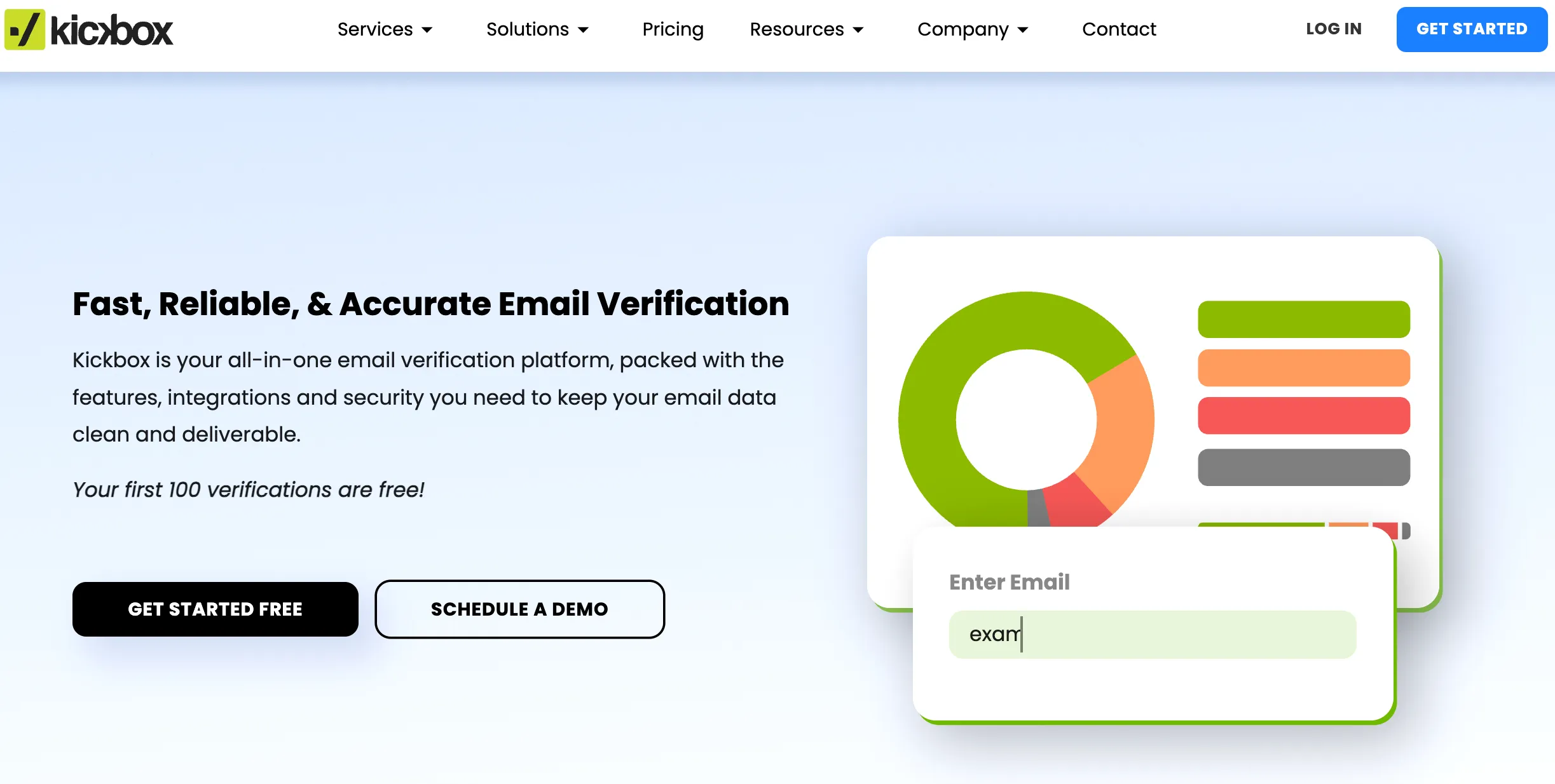
Teams that need pay-as-you-go bulk email verification without monthly subscriptions, especially for one-time list cleaning.
Kickbox is primarily focused on email list verification, not broader deliverability monitoring or campaign analytics.
Free
Pay-as-you-go (credits)
Higher volumes
Enterprise
Pricing is strictly usage-based, with no monthly plans required.
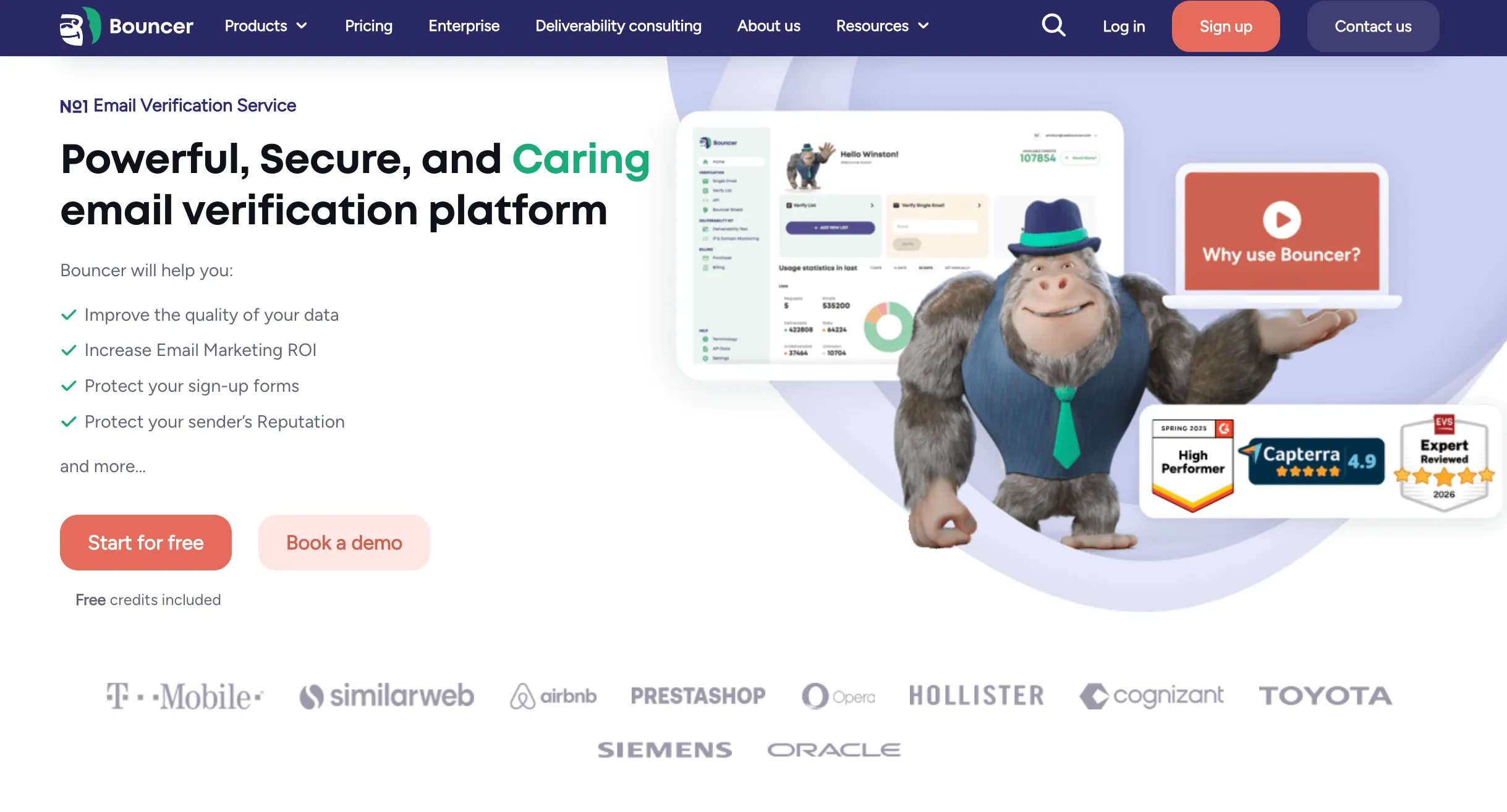
Teams looking for pay-as-you-go email verification with non-expiring credits, especially for periodic or flexible list cleaning.
Bouncer positions itself mainly as a verification-first tool, with additional deliverability features offered as separate products.
Pay-as-you-go (credits never expire)
Bouncer supports both one-time purchases and monthly subscriptions, depending on usage needs.
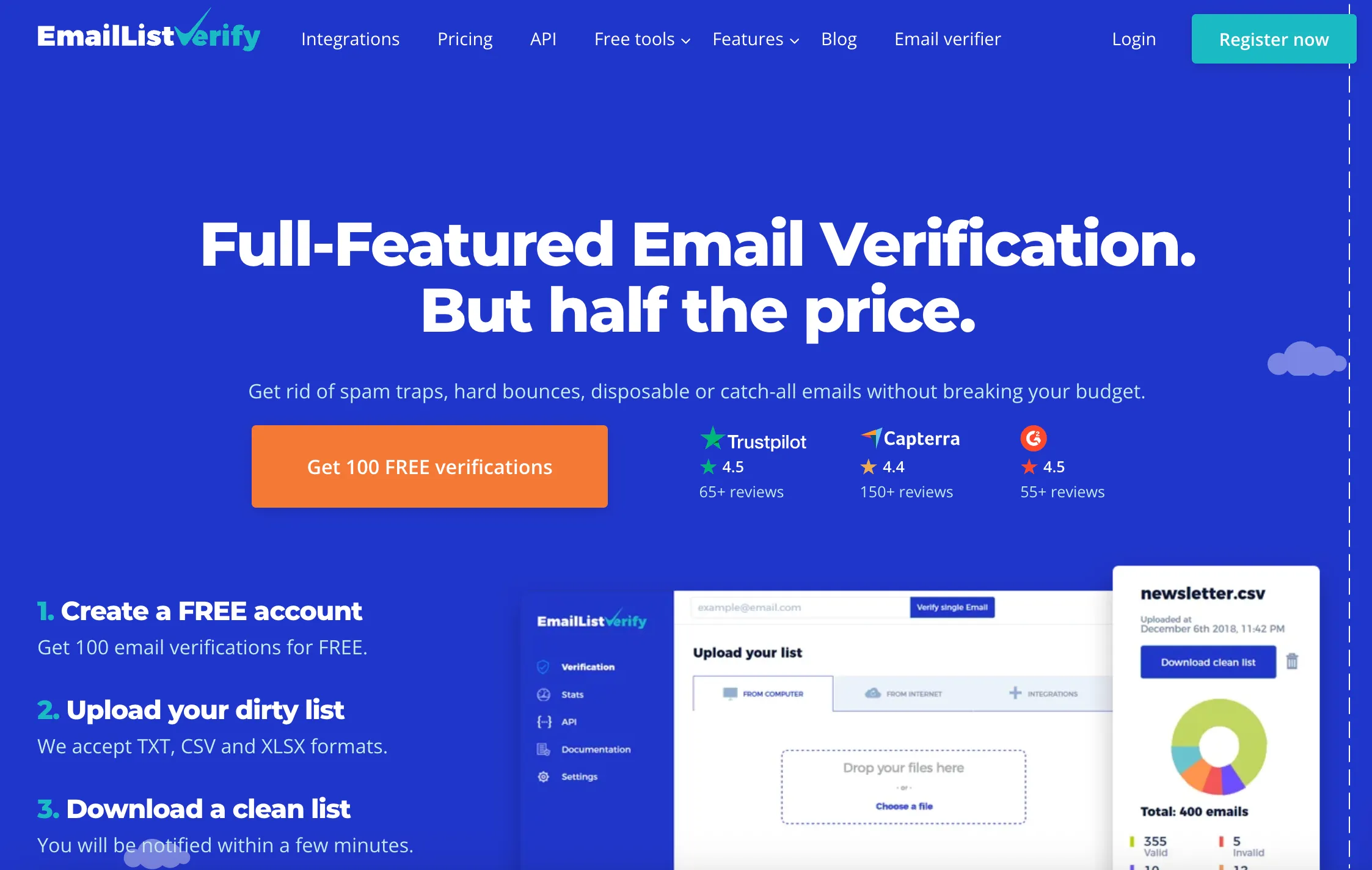
Users looking for low-cost, pay-as-you-go bulk email verification, especially for large one-time lists.
EmailListVerify is positioned as a budget-friendly verifier, rather than a full email deliverability or monitoring platform.
Pay-as-you-go (credits)
Higher volumes
Pricing decreases per credit as volume increases. No monthly commitment is required.
Teams and marketers who want pay-as-you-go email verification with no subscriptions, especially for one-time or irregular bulk list cleaning, where credit flexibility matters.
Emailable is positioned as a straightforward, flexible email verification tool, rather than a full email deliverability or monitoring platform.
Free
Pay-as-you-go
High volume
Credits never expire. No monthly commitment required.
Email verification plays a direct role in email deliverability by reducing the risks that cause emails to bounce, get filtered, or trigger spam defenses. Inbox providers evaluate sender behavior continuously, and list quality is one of the strongest signals they monitor.
When emails are sent to invalid or risky addresses, several negative outcomes occur, including higher bounce rates and a greater chance of emails going to spam due to damaged sender reputation.
Email verification helps prevent these issues by identifying addresses that should not be mailed before a campaign is sent.
Verification is particularly crucial for email marketers and agencies managing large-scale campaigns because even a tiny percentage of invalid addresses can have a significant impact. Inbox providers analyze trends throughout time rather than just campaigns. Sending to invalid, throwaway, or inactive addresses regularly teaches filters to be more suspicious of subsequent emails. This is why email verification should be paired with an ongoing email hygiene process, not treated as a one-time fix.
Inbox placement is not guaranteed by email verification. Nonetheless, it eliminates preventable technological risks that frequently result in deliverability issues, making it a crucial step in conjunction with engagement management, authentication, and responsible sending techniques.
In short, email verification helps ensure that deliverability issues are not self-inflicted by poor list quality.
To create this list, we evaluated email verification tools based on how they are actually used by email marketers, growth teams, agencies, and SaaS teams running campaigns at scale.
Rather than relying on promotional claims, we focused on practical criteria that directly affect list quality, deliverability, and day-to-day usability.
Each tool was reviewed using publicly available documentation, product features, and common use cases. The evaluation focuses on how well each tool supports real email workflows, not how aggressively it markets itself.
We looked at how tools handle core verification tasks, including: We looked at how tools handle core verification tasks, including:
Tools that go beyond basic syntax and domain checks scored higher.
For campaign-based workflows, bulk verification is essential. We evaluated:
For teams validating signups or inbound leads, real-time validation matters. We assessed whether tools offer:
While no tool guarantees inbox placement, some are designed with deliverability in mind. We considered whether tools:
We evaluated how easy each tool is to adopt and use, including:
Pricing models vary widely across tools. We reviewed:
Important Note on Rankings
This list is not ranked based on popularity alone. Tools are positioned according to how well they meet the needs of email marketers and agencies running campaigns at scale.
Different tools may be a better fit for different use cases. The rankings reflect overall usefulness, balance, and workflow support rather than a single feature or pricing model.
In 2026, many marketers start by testing free email verification tools to understand list quality before committing to a paid solution. Legitimate free tools can help catch obvious issues, but they come with clear limitations at scale.
Free email validation tools are useful when you need to:
Most free email verification tools follow a simplified validation process, focusing on syntax checks, domain existence, and basic MX record validation. Advanced checks like SMTP probing, catch-all handling, and risk classification are often limited or unavailable in free tiers.
However, free tools usually come with strict limits on volume, depth, or accuracy. They often lack bulk verification, real-time validation, and advanced risk detection needed for ongoing campaigns.
Email verification is only one part of a complete email marketing workflow. To understand how verification fits alongside acquisition, sending, and optimization, see our guide on must-have email marketing tools.
If you’re just getting started, using a free email validation checker to test results before upgrading is a safe and practical approach. But once deliverability, scale, or reputation matters, relying only on free validation is no longer enough, as unresolved issues can quietly push emails into spam folders over time.
When verifying large email lists, accuracy matters more than speed or price. The right bulk email verification tool should reliably handle scale without introducing deliverability risk.
Mistakes during bulk verification can quickly damage sender reputation, so reliability should always come before cost. These checks are most effective when combined with a regular email hygiene routine that keeps lists clean between campaigns.
For email marketing campaigns, verification tools should support more than one-time list cleaning. The best tools help you:
Email verification works best when it’s part of a broader deliverability strategy, not just a pre-campaign checklist item.
Email verification is no longer optional. As inbox providers become stricter and engagement signals matter more than ever, the quality of your email list directly affects deliverability, reputation, and campaign performance.
The best email verification tool depends on how you send emails:
Free email validation tools are useful for small checks and testing, but they are not designed to protect the sender's reputation over time. As volume grows, the cost of poor validation quickly outweighs the cost of using a reliable tool.
This guide was created to help marketers, agencies, and SaaS teams compare email verification tools based on real use cases, not marketing claims. Each tool listed serves a specific purpose, but not all tools are built for long-term deliverability.
The best email verification tools are those that align with your sending volume, workflow, and long-term deliverability goals, not just price or feature count.
Email verification works best when combined with an understanding of why emails go to spam and how inbox providers evaluate sender behavior.
If you want to validate emails with high accuracy, bulk support, and free credits to get started, you can try SanitizeEmail before committing to a plan.

 Monthly plans starting at